Xoltar
An online notebook by Bryn Keller
Recent Posts
Machine learning, drones, and whales: A great combination!
Last June, a simple question changed my life: “Hey Bryn, what do you know about whales?” Of course like most people, my answer was “Not much,” but that marked the beginning of an important project to help track the health of whale populations by using machine learning to analyze video from drones. Parley for the Oceans introduced me and my colleagues Ted Willke and Javier Turek to Dr. Iain Kerr of Ocean Alliance, and we started talking about how machine learning could help make marine biologists’ lives easier and help protect the whales, using the video from Dr. Kerr’s SnotBot drones.
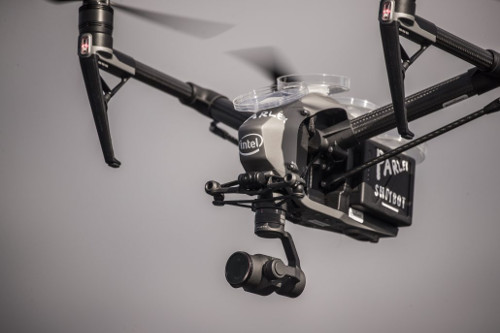
SnotBot drone with Petri dishes, courtesy of Christian Miller
Python Class Properties

Class properties are a feature that people coming to Python from other object-oriented languages expect, and expect to be easy. Unfortunately, it’s not. In many cases, you don’t actually want class properties in Python - after all, you can have first class module-level functions as well, you might very well be happier with one of those.
I sometimes see people claim that you can’t do class properties at all in Python, and that’s not right either. It can be done, and it’s not too bad. Read on!
Read moreMac OS X C++ Development (part 2)

As I wrote in my previous post, I recently started working on a Mac. This is a collection of my notes on the problems and surprises I ran into. Maybe it will be useful for you, too.
Read moreMac OS X C++ Development

I recently switched to a MacBook Pro. I have customers that use Linux and Mac, and I wanted to work in a similar environment. Also recently (a few months before the MacBook) I started working with C++ again after a long hiatus.
I had thought that the Mac, being a Unix, would be relatively close to Linux, and that things I was building for Linux would be much more likely to work there than on Windows. That might still be true, but it turns out that there are several things on Mac that are not obvious, and seriously complicate native code development compared with Linux. These are my notes on those differences and how to deal with them. Hopefully, it may be useful for other migrants to Mac as well.
Read moreHigher Order Type Theory Resources
Recently there’s been an outpouring of useful resources folks have found for learning Homotopy Type Theory (aka HoTT). These have come mainly from the HoTT Cafe Google Group.
The main resource is of course, the book, but these videos and other resources seem useful enough that I want a consolidated list of them for myself. So I thought maybe you might, too.
Read moreWorking with Hakyll

WordPress was nice for some time. There were lots of nice themes to choose from, installation was easy, things mostly worked. However, the need to keep updating it with security patches, and the need to keep sifting through comment spam, became tiresome.
I always wish I had time to work on something in Haskell, so I decided to put the need for a new blog platform together with that: I’ve switched to Hakyll, at least for now.
Read moreOther recent posts
- Machine learning, drones, and whales: A great combination! - April 26, 2018
- Python Class Properties - June 27, 2016
- Mac OS X C++ Development (part 2) - May 3, 2016
- Mac OS X C++ Development - April 21, 2016
- Higher Order Type Theory Resources - July 15, 2015
- Working with Hakyll - July 9, 2015
…or you can find more in the archives.